
Selecting a lock for an electrical cabinet might seem like a minor detail in the grand scheme of industrial design. However, this small component bears the critical responsibility of ensuring the safety, security, and long-term reliability of the equipment inside. An ill-suited lock can lead to access issues, compromised sealing, premature failure, and even safety hazards.
For engineers, procurement specialists, and panel builders, navigating the myriad of options can be complex. This guide breaks down the key decision-making parameters into a clear, actionable checklist, helping you specify the optimal lock for your next project with confidence.
Step 1: Define the Primary Function & Lock Type
The first question is: what is the primary purpose of this lock?
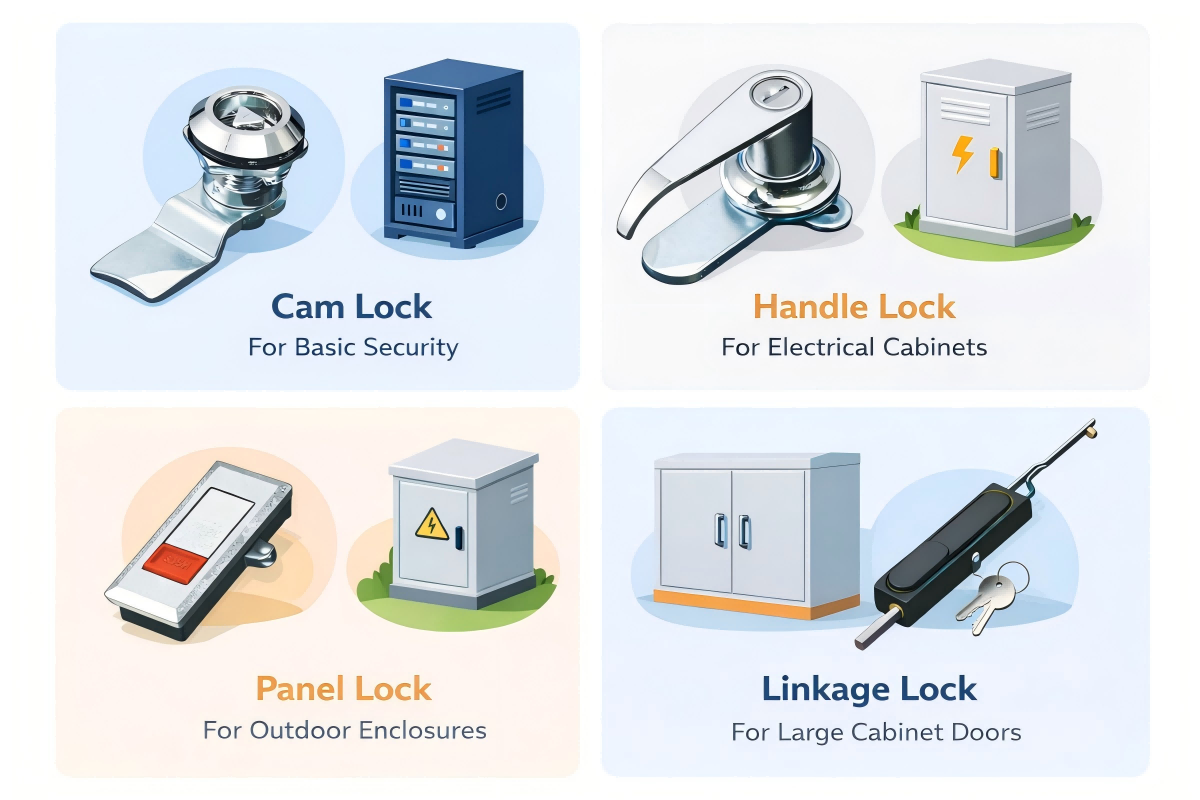
- For Basic Security & Vandalism Prevention: A Cam Lock (Tumbler Lock) is often the universal, cost-effective choice. It provides reliable, key-operated security for panels that do not require frequent access.
- For High-Frequency Access & Ergonomic Operation: A Handle Lock is superior. It combines a comfortable grip for easy opening of heavy doors with an integrated locking mechanism, streamlining daily maintenance.
- For Flush-Mount Aesthetics & Damage Prevention: Where a clean, snag-free profile is essential (e.g., on outdoor cabinets or modern designs), a Flush Mount / Panel Lock is ideal. It sits perfectly level with the door surface.
- For Full-Perimeter Sealing on Large Doors: A Rod Lock (Linkage Lock) System is necessary. Operated by a central handle or key, it drives multiple locking points along the door edge simultaneously, ensuring an even, secure seal—ideal for large electrical enclosures requiring high ingress protection.
Quick Reference:
- Cam Lock: Best for standard, low-frequency access panels.
- Handle Lock: Best for doors opened daily; prioritizes operator ease.
- Flush Mount Lock: Best for sleek design and outdoor durability.
- Rod Lock (Linkage Lock): Best for large cabinet doors requiring a full-perimeter environmental seal and enhanced rigidity.
Step 2: Evaluate the Operational & Environmental Demands
Once the type is narrowed, these factors dictate the required specifications.
Material & Finish (The Foundation of Durability):
- Zinc Alloy: A robust, economical standard for most indoor applications.
- Stainless Steel (304/316): Mandatory for harsh environments—coastal areas, chemical plants, food processing, or outdoors—due to its superior corrosion resistance.
- Finish: Look for quality plating (zinc-nickel, chrome) or powder coating. The finish must withstand Salt Spray Testing relevant to the cabinet’s IP rating and location.
Mechanical Security & Keying:
- Cylinder Type: Discuss security levels with your supplier. Options range from standard pin tumbler to more pick-resistant tubular or magnetic cores.
- Key Management: Plan for future logistics.
Keyed Differently (KD): Every lock has a unique key.
Keyed Alike (KA): Many locks open with one master key—ideal for a facility with many cabinets.
Master Keyed (MK): A hierarchical system allowing different levels of access.
Installation & Integration:
- Panel Thickness: This is a critical, often-overlooked dimension. Verify the lock’s designed mounting range matches your door’s exact thickness.
- Mounting Style & Cut-out: Confirm if it’s a straight-through-bolt, clip-on, or screw-in installation, and prepare the correct panel cut-out template.
- Sealing Integration: For IP-rated cabinets , ensure the lock design accommodates or is supplied with an appropriate gasket to maintain the seal around its housing.
Step 3: The Final Selection Checklist
Before finalizing your order, run through this quick list:
- Application: Lock type chosen matches access frequency and door size.
- Environment: Material (Stainless Steel / Zinc Alloy) and finish grade are suitable for the operating environment.
- Security: Cylinder type and keying system (KD/KA/MK) meet operational and safety protocols.
- Compatibility: Lock is confirmed to be compatible with the door’s thickness, cut-out, and required seal.
Why Partner with a Specialist Manufacturer?
Choosing a lock is more than checking boxes on a datasheet. A specialist like Lida Lock adds crucial value:
- Technical Advisory: We help you navigate these very parameters, preventing costly specification errors.
- Customization Capability: Need a non-standard color (RAL matched), a unique geometry, or a custom keying suite? We provide tailored solutions beyond catalog offerings.
- Consistent Quality & Supply: Our rigorous control over materials and manufacturing ensures every lock performs as specified, batch after batch, with reliable delivery for your production schedule.
Conclusion
Specifying the correct electrical cabinet lock is a calculated engineering decision that protects your asset and its contents. By systematically considering function, environment, and integration, you move from a generic component to a guaranteed fit.
Looking for expert guidance on your specific application?
Contact the Lida technical team today. Provide us with your door specifications and environmental challenges, and we will recommend the optimal locking solution with supporting CAD drawings and samples. Let’s build security that lasts.
Post time: Jan-14-2026