
 Introduction: The Paradigm Shift in Access Control
In an era where security breaches are becoming increasingly sophisticated, the demand for robust, intelligent, and aesthetically pleasing locking mechanisms has never been higher. Traditional mechanical locks, while reliable, often fail to offer the flexibility required by modern property managers and homeowners. Enter the MS716 panel lock, a cutting-edge solution that seamlessly merges the ruggedness of industrial hardware with the convenience of smart access technology. This article delves deep into the technical specifications, application scenarios, and security advantages of the MS716, establishing why it has become the gold standard for surface-mounted locking systems globally.
Product Overview: Defining the MS716 Panel Lock
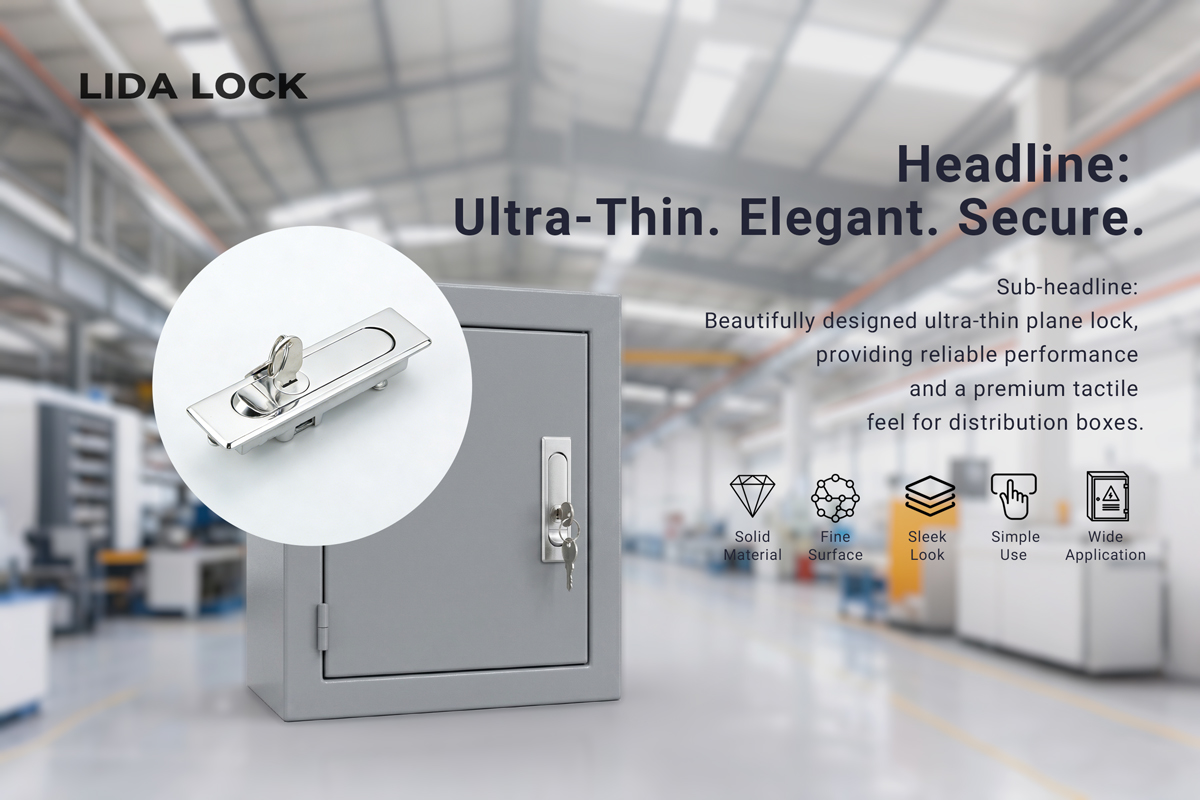
The MS716 panel lock is a premium-grade, surface-mounted electronic lock designed to provide secure access control for a variety of entry points. Unlike mortise locks that require complex cutouts within the door structure, the MS716 operates on a panel or surface-mount principle, making it ideal for glass doors, metal cabinets, wooden gates, and commercial storefronts. Its form factor is specifically engineered to withstand high-traffic environments while maintaining a sleek, professional aesthetic. For security professionals and DIY enthusiasts alike, understanding the nuances of the panel lock category is essential, and the MS716 represents the pinnacle of this category.
Key Features and Technical Specifications
To appreciate the value of this hardware, one must analyze its core components. The MS716 is built with a high-grade zinc alloy or stainless steel housing, offering exceptional resistance to corrosion and physical impact. It typically boasts an IP65 or higher weatherproof rating, ensuring functionality in extreme temperatures, rain, and dust-laden environments.
Regarding access methodologies, the MS716 panel lock supports a diversified approach:
- RFID/Fob Access: Allows for quick, contactless entry.
- Backlit Keypad: Supports PIN code management, with the capacity for multiple user codes, which is critical for businesses managing temporary staff.
- Mechanical Key Override: A failsafe feature ensuring that even in the event of a complete electronic failure, entry is never compromised.
Furthermore, the lock is powered by a durable motorized latch mechanism, offering silent operation combined with high holding force—a crucial feature for environments where noise reduction is prioritized.
Application Scenarios: Versatility in Deployment
The primary strength of the MS716 panel lock lies in its adaptability. In commercial settings, it is frequently utilized for server rooms, office partition doors, and telecommunications cabinets. Property managers appreciate that this panel lock eliminates the need for re-keying entire buildings when staff turnover occurs; a simple reprogramming of the digital keypad suffices.
Industrial applications often require locks that can endure chemical exposure or heavy vibration. The robust construction of the MS716 makes it suitable for factory control rooms and warehouse entry points. On the residential front, homeowners are increasingly opting for the MS716 for side gates, home offices, and garage entrances, citing the convenience of not needing to carry physical keys while jogging or gardening.
Security Analysis: Why the MS716 Stands Out
From a cybersecurity and physical security standpoint, the MS716 incorporates several advanced features. The electronic control unit is equipped with anti-tamper algorithms; if a user inputs an incorrect code multiple times, the system enters a lockdown period, effectively deterring brute-force attacks.
Moreover, higher-end variants of the MS716 panel lock offer audit trail capabilities. Administrators can download logs to see exactly who accessed the door and at what time. This level of accountability is invaluable for businesses subject to regulatory compliance standards such as GDPR or HIPAA, where data regarding entry to sensitive areas must be meticulously recorded.
Installation and Maintenance Best Practices
For integrators and locksmiths, installation of the MS716 is straightforward but requires attention to detail. As a surface-mounted panel lock, it requires a stable mounting plate. It is essential to ensure that the latch bolt aligns perfectly with the strike plate to prevent undue stress on the motor over time.
Routine maintenance primarily involves battery replacement (typically 4x AA or a dedicated lithium pack) and occasional cleaning of the keypad and fingerprint sensor (if applicable). Due to its modular design, the MS716 allows for easy replacement of individual components—such as the motor or the circuit board—without requiring the demolition of the entire locking assembly, thereby reducing long-term ownership costs.
Conclusion
The MS716 panel lock represents a convergence of durability, intelligence, and design. Whether securing a high-traffic commercial facility or a private residence, it offers a level of control that traditional mechanical locks simply cannot match. By integrating robust physical construction with versatile digital access methods, the MS716 ensures that security is never a bottleneck to convenience. For those looking to upgrade their security infrastructure, investing in a high-quality panel lock like the MS716 is not just a purchase—it is a strategic decision for long-term safety and operational efficiency.
Post time: Mar-28-2026