
In today’s industrial landscape, procurement decisions are undergoing a fundamental reevaluation. For OEMs, facility managers, and bulk order buyers, the true cost of a component is no longer its price on an invoice. The focus is shifting decisively toward Total Cost of Ownership (TCO) and the broader impact on operational sustainability. Industrial cabinet locks, often perceived as simple commodities, are critical in this calculus. A high-performance lock engineered for longevity is not just a purchase; it is a strategic investment in reducing waste, minimizing downtime, and supporting corporate Environmental, Social, and Governance (ESG) objectives. This article explores how specifying for durability creates tangible value across the entire supply chain.
Outline
- The True Cost Equation: Moving Beyond Unit Price – Introduces the concept of Total Cost of Ownership (TCO) for industrial hardware and identifies the hidden costs of failure.
- Decoding Lifetime Value: Reliability as a Sustainability Driver – Analyzes how durable design directly reduces resource consumption, waste, and carbon footprint over a product’s lifecycle.
- The Manufacturer’s Role: Engineering for Extended Service Life – Details how material selection, design, and customization are used to maximize longevity and minimize TCO.
- A Strategic Framework for Value-Driven Procurement – Provides actionable guidance for buyers and specifiers to evaluate hardware based on long-term performance.
1. The True Cost Equation: Moving Beyond Unit Price
The initial purchase price of a cabinet lock is merely the first line in a complex cost ledger. True costing must account for the complete lifecycle:
- Acquisition & Installation: Unit cost and labor for fitting.
- Maintenance & Downtime: Costs associated with lubrication, adjustment, or repair. Unplanned failure can halt production lines, creating losses far exceeding the component’s value.
- Replacement & Disposal: The cost of the new part, labor for swap-out, and the waste stream generated by the failed unit.
- Administrative Overhead: The hidden costs of processing warranty claims, sourcing replacements, and managing inventory for spares.
A lock that fails prematurely transforms a low initial MOQ into a recurring, costly problem. For wholesale distributors and vendors, promoting products with low TCO builds stronger, trust-based relationships with clients, moving beyond transactional batch order procurement.
2. Decoding Lifetime Value: Reliability as a Sustainability Driver
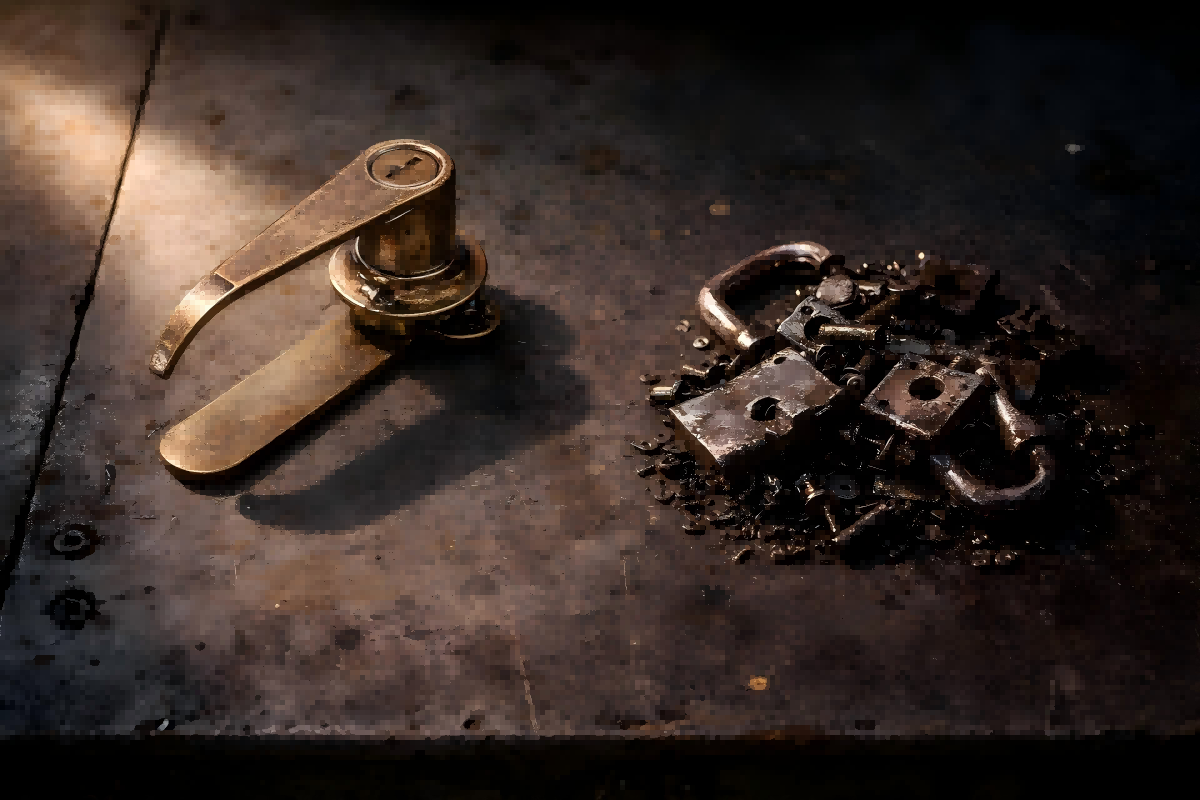
Durability is intrinsically linked to sustainable operations. A lock designed to last for decades directly contributes to environmental and economic goals:
- Resource Efficiency & Waste Reduction: Every premature replacement represents wasted raw materials (zinc, steel, aluminum) and energy consumed in manufacturing, packaging, and shipping. Specifying longer-life components is a direct form of waste prevention at the source.
- Reduced Carbon Footprint: The recurring transportation of replacement parts for global operations adds cumulative carbon emissions. Durable hardware minimizes this frequency, supporting Scope 3 emissions reduction targets for OEMs and end-users.
- Supporting Circular Principles: Robust, serviceable locks align with circular economy models. Their long life defers entry into the waste stream, and high-quality materials like stainless steel have greater potential for recycling at end-of-life.
3. The Manufacturer’s Role: Engineering for Extended Service Life
Achieving exceptional lifecycle performance is a deliberate engineering outcome. As a manufacturer and ODM partner, it requires embedding durability at every stage:
- Material Science as a Foundation: The choice of marine-grade stainless steel over standard plating, or high-purity zinc alloys with advanced coatings, is a primary determinant of corrosion resistance and mechanical wear. This directly dictates performance in harsh environments, from coastal substations to chemical plants.
- Design for Reliability: Precision matters. A multi-point linkage lock distributes closing force evenly, preventing door strain and seal wear. A cam lock with a hardened steel tongue and robust spring will maintain consistent operation through tens of thousands of cycles. These are not accidental features but results of focused design intent.
- Customization for Optimal Fit: As an ODM, working with clients on custom solutions—such as a specific seal integration for a flush mount lock or an extended spindle for a unique panel thickness—ensures perfect application fit. This prevents improper installation, a major cause of early failure, and adds value far beyond a standard catalog item.
4. A Strategic Framework for Value-Driven Procurement
Shifting to a TCO model requires new criteria for supplier selection and product specification.
- Interrogate the Quality Foundation: Request material certifications and standardized test reports (e.g., salt spray ASTM B117 for corrosion). A reputable factory will provide transparent data that validates longevity claims.
- Evaluate Design and Serviceability: Examine the engineering. Are critical wear points reinforced? Is the design simple and robust? A lock designed for easy service extends its usable life.
- Partner for Lifecycle Value: Seek suppliers who discuss TCO. A true partner understands that their success is tied to your equipment’s reliability in the field. They will offer customization not as an upsell, but as a way to optimize the product for your specific lifecycle challenges, whether for a prototype or a bulk production run.
Conclusion
Building a Legacy of Reliability

In an era focused on resilience and sustainability, the industrial components we specify carry profound responsibility. Choosing a cabinet lock engineered for lifetime value is a decisive step toward lower operational costs, reduced environmental impact, and more resilient infrastructure.
At Lida Lock, we engineer with the future in view. As a dedicated manufacturer and collaborative ODM partner, we integrate material integrity, precision design, and application-specific customization to deliver hardware that stands the test of time. We empower our global network of distributors and OEM clients to offer not just a product, but a promise of enduring performance and responsible operation.
Ready to calculate the true value of your cabinet security?
Contact our engineering team today to discuss how our lifecycle-optimized locking solutions can reduce your TCO and advance your sustainability goals.
Post time: Feb-04-2026