
In the pursuit of ultimate operational safety, the industrial sector is increasingly turning to a definitive, fail-safe principle: mechanical interlocking. Moving beyond the basic function of securing a door, these engineered systems physically enforce safe operating sequences, preventing human error before it can occur. For OEMs designing next-generation equipment and facility managers overseeing critical infrastructure, this represents a fundamental shift from administrative controls to built-in, hardware-based safety. This article explores the growing demand for these solutions and how specialized manufacturers are responding with reliable, application-specific hardware.
Outline
- The Market Shift: From Instruction to Enforcement – Analyzes the drivers behind the rising demand for hardware that enforces safety procedures.
- The Engineering Core: Principles of Reliable Interlocking – Explains the key design philosophies behind effective mechanical interlock systems.
- Lida Lock’s Solution Portfolio: From Standard Components to Custom Systems – Showcases how specific product lines meet interlocking challenges and highlights customization capabilities.
- Conclusion: Partnering for Inherent Safety – Summarizes the value of integrating interlocking design early and invites collaboration.
1. The Market Shift: From Instruction to Enforcement
Compliance with global safety standards like Lockout/Tagout (LOTO) and machinery safety directives is no longer solely about procedures and training. There is a clear trend toward implementing physical interventions that make violations impossible. This is driven by the need to protect personnel, safeguard expensive assets, and eliminate the catastrophic costs of operational errors in industries like power distribution, manufacturing, and process control.
For procurement specialists and OEM designers, this translates into a new specification requirement: locks must do more than just lock; they must integrate logically with the equipment’s function. This creates opportunities for suppliers and distributors who can provide not just parts, but validated safety functionality.
2. The Engineering Core: Principles of Reliable Interlocking
Effective mechanical interlocking rests on two pillars: positive control and environmental resilience.
- Positive Control means the lock mechanism directly interfaces with the machine’s operation. A common example is a system where a linkage lock or a specially designed handle lock physically blocks a circuit breaker handle from moving to the “ON” position unless an access panel is first securely closed and locked. The logic is built into the hardware.
- Environmental Resilience ensures this function lasts. Interlocks are often deployed in harsh, high-cycle, or corrosive environments. Therefore, every component—from the stainless steel cam in a rotary latch lock to the housing of a flush-mounted lock—must be engineered for long-term durability and consistent performance under stress, vibration, and exposure.
3. Lida Lock’s Solution Portfolio: From Standard Components to Custom Systems
At Lida Lock, we engineer our core product lines with the principles of integration and durability in mind, serving as the building blocks for complex safety systems.
- Linkage Locks for System-Wide Security: Our multi-point rod lock systems are the ideal solution for securing large cabinet doors uniformly. By distributing locking force across multiple points, they ensure a perfect seal and provide the robust framework to which other interlocking elements can be linked, forming the backbone of a comprehensive safety door.
- Precision Handles & Latches for Control Points: The heavy-duty handle lock serves as the intuitive, ergonomic interface for complex interlocking sequences. We design them with the strength and precision to actuate internal linkages reliably, tens of thousands of times. Similarly, our rotary cam locks offer reliable keyed control for panels and access points that are part of a larger safety procedure.
- The Customization Imperative: Standard products provide a foundation, but real-world challenges are often unique. As an experienced ODM partner, our core competency lies in customization. Whether it’s modifying a flush lock to integrate a micro-switch for electrical feedback, adapting a linkage system to fit a non-standard cabinet layout, or developing a completely unique interlock mechanism for a specific machine, we collaborate with OEM clients to engineer solutions that are not found in any catalog. We understand the requirements for batch order consistency and MOQ flexibility for such development projects.
Conclusion
4. Partnering for Inherent Safety
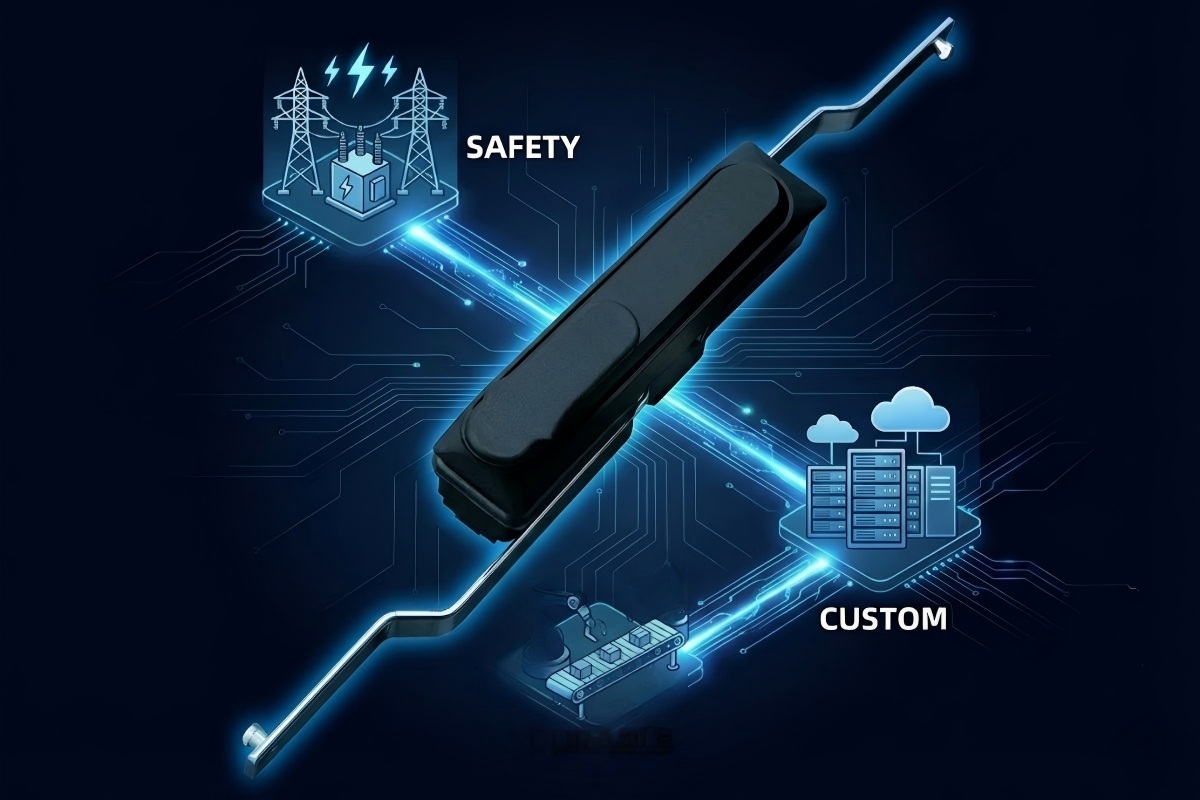
The integration of mechanical interlocking is a powerful step toward inherently safer industrial design. It represents a smart investment in risk reduction, operational continuity, and compliance confidence.
Your vision for safety, engineered into reality. Lida Lock operates as a manufacturer and solution partner, not just a vendor. We combine robust standard product lines with deep custom engineering expertise to help you build safety directly into your equipment. From supporting wholesale distributors with reliable stock to developing turnkey interlocking systems for global OEMs, our focus is on delivering uncompromising reliability.
Ready to design a safer interface?
Contact our engineering team today to discuss your application challenge. Let’s transform your safety logic into a durable, mechanical reality.
Post time: Feb-07-2026